Summarize this page via
Perplexity vs Gemini: An honest comparison for content writers
 Jan 23, 2026
 21 minutes
Looking for the best AI assistant for blog writing? Struggling to simplify your workflow and meet publishing deadlines? Worry not, we’ve got you covered with the solution!
With so many options promising to transform your content workflow, two tools always stand out: Perplexity AI and Google’s Gemini.
These platforms have varying working processes for using AI for content creation. Perplexity positions itself as an “answer engine” that prioritizes research and cited information. Gemini offers a more traditional chatbot experience with multimodal capabilities.
But here’s the real question: which one actually helps you write better and SEO-optimized blog posts? Both of them or maybe neither?
This comparison breaks down Perplexity vs Gemini specifically for content writing and blogging. You’ll see how each tool handles research, reasoning, SEO understanding, and the actual writing process.
So, let’s get started.
General overview of Gemini’s capabilities
Gemini represents Google’s flagship AI mode. It is designed to compete directly with ChatGPT and other leading conversational AI systems.
What makes Gemini notable for content writers is its deep integration with Google’s ecosystem and its multimodal architecture.
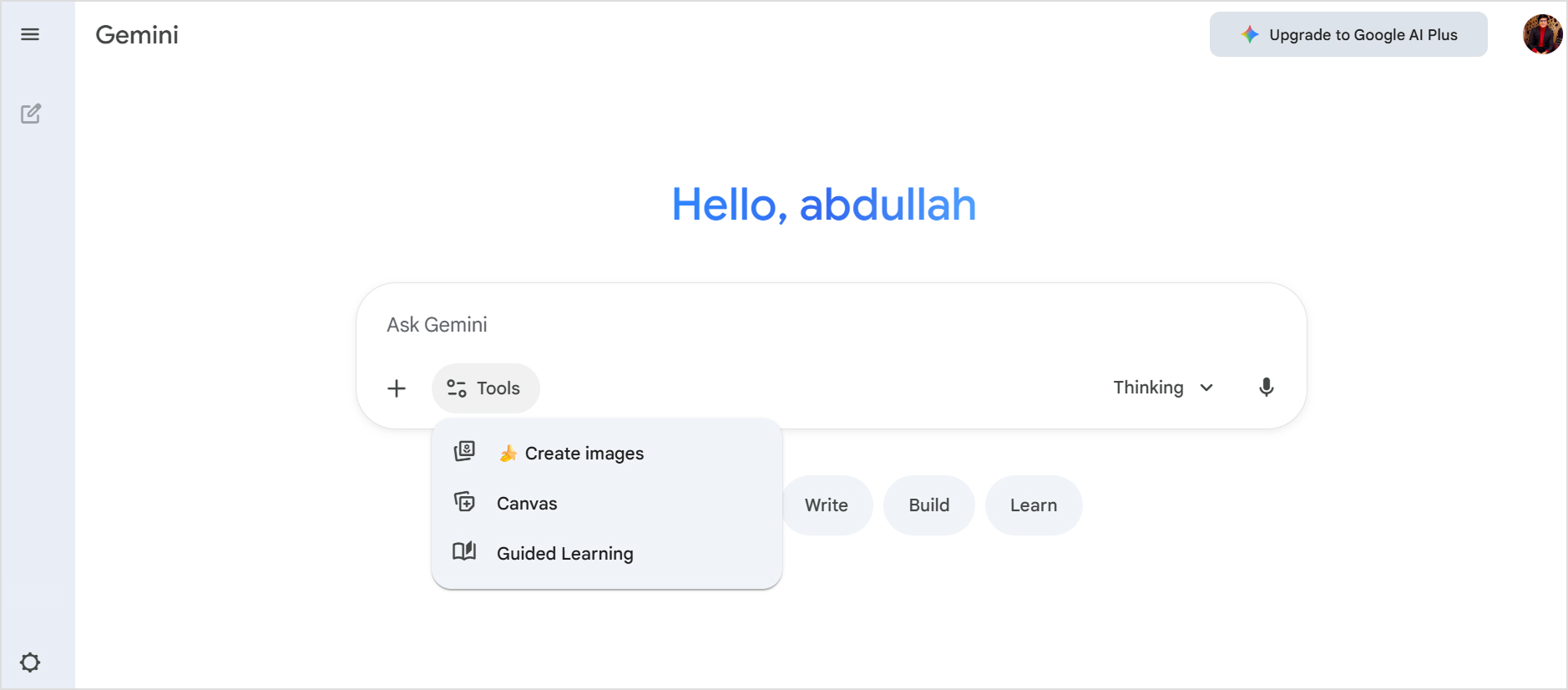
The platform comes in several tiers. Gemini (formerly Bard) offers free access with solid capabilities, while Gemini Advanced provides access to the more powerful Gemini 3 Pro model through a Google One AI Premium subscription.
Gemini’s core strengths for content creation include:
- Real-time information access. Unlike some AI models with fixed knowledge cutoffs, Gemini can pull current information from the web. This proves valuable when writing about trending topics or recent developments.
- Google Workspace integration. If you’re already using Google Docs, Gmail, or Drive, Gemini can work directly within these tools. You can draft blog content in Docs with AI assistance built in.
- Multimodal understanding. Gemini can analyze images, which helps when you need to describe visuals, create alt text, or generate content based on reference materials.
- Long context window. Gemini 3.0 Pro offers an impressive context window (up to 1 million tokens in some configurations), allowing it to process and reference lengthy documents, research papers, or existing content libraries.
Bloggers can use Gemini to handle tasks like generating outlines, expanding on ideas, rewriting sections for clarity, and adapting content for different audiences.
The writing style tends toward conversational and accessible, though it sometimes requires prompting to achieve a specific tone of voice.
Also read: Copilot vs Gemini: The ultimate 2026 showdown
One thing to note: Gemini’s responses often feel “safe” and generic without careful prompting. It’s designed to be helpful to a broad audience, which can work against bloggers seeking distinctive, opinionated content.
General overview of Perplexity’s capabilities
Perplexity AI takes a fundamentally different approach to AI assistance. Rather than positioning itself as a general-purpose chatbot, Perplexity focuses on being a research and answer engine. Every response includes citations to its sources, making it a hybrid between a search engine and a conversational AI.
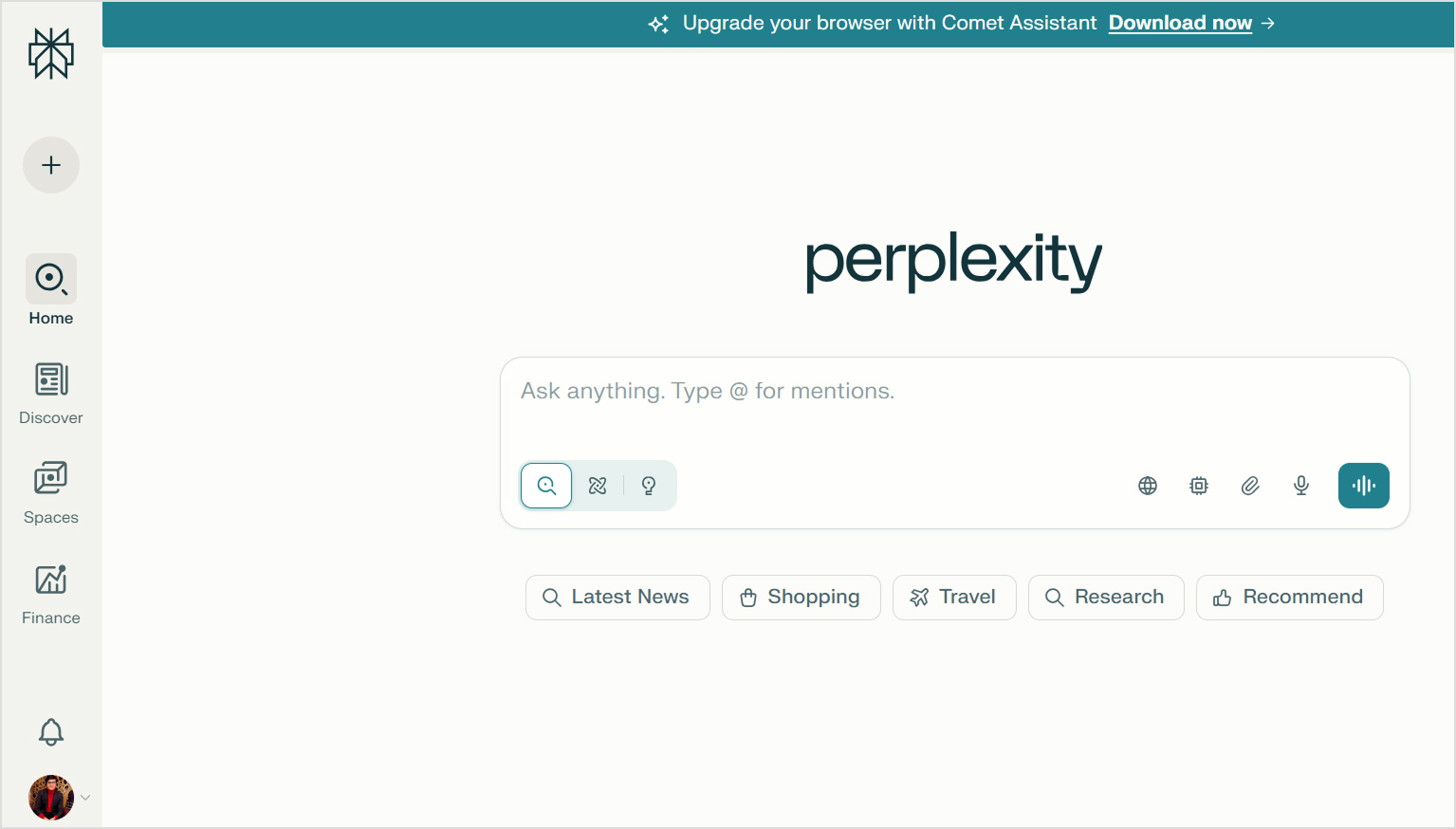
This research-first philosophy has significant implications for content writers. When you ask Perplexity a question, it doesn’t just generate an answer from its training data. Instead, it searches the web, synthesizes information from multiple sources, and presents findings with numbered citations you can verify.
Key features that matter for bloggers:
- Source citations on every response. Each claim links back to its origin, making fact-checking straightforward and helping you build credibility in your content.
- Focus mode options. Perplexity lets you limit searches to specific source types, including academic papers, YouTube videos, Reddit discussions, or general web results. This helps when you need specific types of research for different content.
- Pro Search for complex queries. The premium feature asks clarifying questions and conducts more thorough research, useful for comprehensive blog topics that require depth.
- Collections for organizing research. You can save and organize conversations by topic, building a reference library for ongoing content projects.
Perplexity operates on a freemium model. The free tier offers substantial functionality, while Perplexity Pro ($20/month) provides more Pro Searches.
Also read: Perplexity vs ChatGPT: Which AI helps you write better blogs?
The tradeoff is clear: Perplexity prioritizes accuracy and verifiability over creative content generation. It answers questions rather than writing prose, which affects how you’d integrate it into a blogging workflow.
Comparing Perplexity vs Gemini
Before exploring specific capabilities, here’s a quick comparison of how these tools stack up for blogging and content writing:
| Feature | Perplexity AI | Google Gemini |
| Primary strength | Research and sourced information | Conversational writing and the Google ecosystem |
| Citation quality | Excellent. Every claim is cited | Limited. Sources are not consistently shown |
| Real-time information | Yes, with web search | Yes, with Google Search integration |
| Writing style | Factual and concise | Conversational and adaptable |
| Best for | Research, fact-gathering, verification | Drafting, brainstorming, rewriting |
| Free tier | Generous with core features | Full access to the base Gemini model |
| Premium cost | $20/month | $19.99/month |
| SEO features | None built-in | None built-in. |
| Content length handling | Good for short-to-medium content | Excellent with a long context window |
| Integration options | API, browser extension | Deep Google Workspace integration |
| Image analysis | Available in Pro | Built into all tiers |
| Learning curve | Low | Low |
Now, let’s get to the details of this comparison by reviewing each tool one by one in each feature and aspect.
Perplexity vs Gemini in research
Research forms the foundation of quality blog content. Both tools approach this task differently, and understanding these differences helps you choose the right one for your workflow.
Perplexity’s research approach
Perplexity treats every query as a research opportunity. When you ask about a topic, it searches multiple sources, synthesizes the information, and presents findings with numbered citations. This happens automatically, without you needing to request sources.
For example, if you’re researching statistics for a blog post about email marketing trends, Perplexity would pull data from recent studies, industry reports, and authoritative sources in a blink. Each statistic links back to its origin, so you can verify accuracy and cite properly in your content.
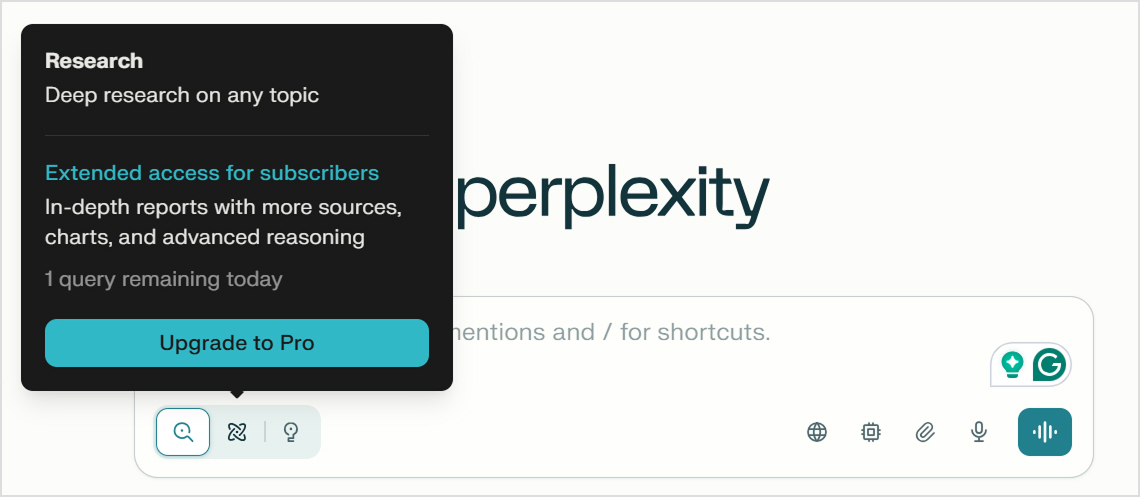
Free users, however, have limited access to Pro research capabilities.
Gemini’s research approach
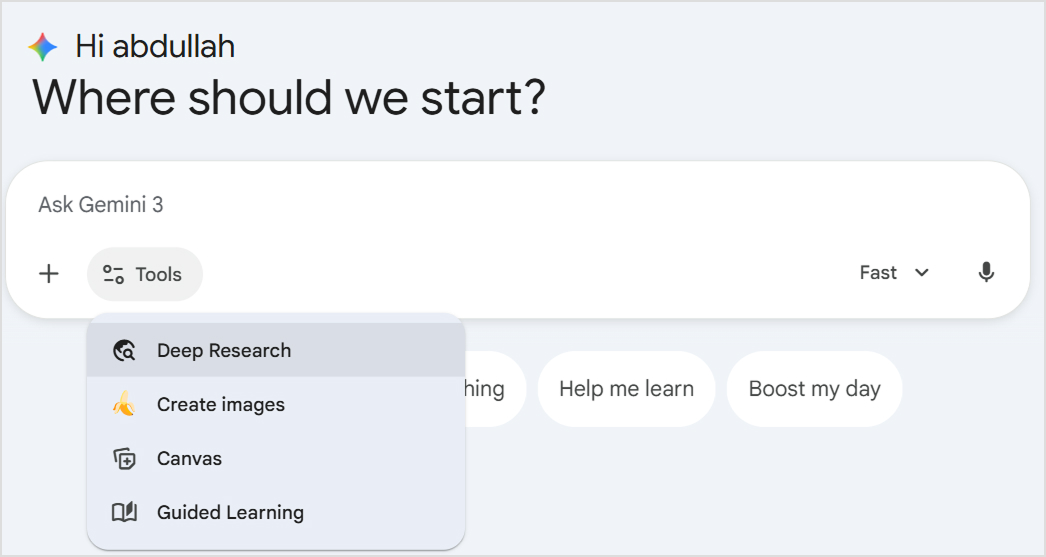
Gemini integrates Google Search capabilities, giving it access to current information. However, the experience differs significantly from Perplexity. Gemini synthesizes information more invisibly, often presenting conclusions without clear source attribution.
When Gemini does cite sources, it typically shows them at the end of a response rather than in-text like Perplexity. This makes verification more cumbersome.
Verdict
For research-heavy blog writing, Perplexity wins clearly. The automatic citations, source filtering, and verification-focused design make it significantly more practical for gathering accurate information.
That said, Gemini’s connection to Google’s knowledge graph gives it a strong contextual understanding. Gemini can research, but it requires more prompting and manual verification.
Perplexity vs Gemini in reasoning
Blogging isn’t just about collecting facts. You need to synthesize information, draw connections, build arguments, and guide readers to conclusions. Reasoning capability determines how well an AI can help with these higher-order tasks, streamlining your workflows for success.
Perplexity’s reasoning capability
Perplexity’s reasoning operates within its research-focused framework. It’s good at synthesizing multiple sources into coherent answers and identifying patterns across different pieces of information. When sources conflict, they will often acknowledge the disagreement rather than arbitrarily choosing one position.
However, Perplexity’s reasoning stays close to its sources. It’s less likely to make creative leaps or generate novel insights that go beyond the information it finds.
This is by design (the tool prioritizes accuracy), but it can limit its usefulness for opinion pieces or thought leadership content.
Gemini’s reasoning capability
Gemini shows stronger general reasoning abilities, particularly for abstract or creative thinking tasks. It handles hypotheticals well, can construct arguments from first principles, and generates insights that don’t require direct source backing.
For blog writing, this translates to better brainstorming sessions.
Ask Gemini to explore the implications of a trend, and it will generate multiple angles and perspectives. It’s more comfortable making the kinds of logical leaps that make content interesting rather than just informative.
Also read: Gemini vs ChatGPT: The ultimate comparison for blog writers
Verdict
Gemini edges ahead for reasoning tasks, especially those involving creative thinking, argument construction, or synthesis beyond available sources. Perplexity offers more reliable reasoning when accuracy matters more than insight.
Perplexity vs Gemini in content writing
Both tools can generate text, but they approach the writing process quite differently.
Perplexity’s writing capability
Perplexity generates writing primarily as an extension of its answer functionality. When you ask it to write something, it approaches the task like it’s answering a question about how that content should be written, then provides the result.
The writing quality is competent but not exceptional. Responses tend to be factual, well-organized, and concise. Perplexity won’t give you florid prose, and it typically prioritizes clarity over style.
Gemini’s writing capability
Gemini was designed more explicitly as a conversational AI, and this shows in its writing output. It handles different tones and styles more fluidly, adapts to examples you provide, and produces prose that reads more naturally.
Ask Gemini to write a blog post in a casual, conversational tone, and it genuinely sounds casual and conversational. Request something more formal, and the shift is noticeable. This stylistic flexibility matters for bloggers who need to match specific brand voice guidelines.
Verdict
Gemini is the stronger pure writing tool, offering more stylistic range and better long-form capabilities. Perplexity’s writing serves its research function well, but won’t replace a dedicated writing-focused AI for most blogging needs.
We’ll explore the writing capabilities of both of these tools in the later section as well.
Perplexity vs Gemini in content depth
Content depth refers to how thoroughly a tool can explore a topic, whether it provides comprehensive coverage or only covers it at a surface level.
Perplexity’s approach to depth
Perplexity’s depth comes from its multi-source research capability. When exploring a topic, it pulls information from numerous sources, often surfacing details, perspectives, or data you wouldn’t find in a single search.
The limitation is that Perplexity’s depth stays within what’s already written and indexed. It won’t generate novel analysis or fill gaps where information doesn’t exist online.
Gemini’s approach to depth
Gemini handles depth differently. It can go deep on topics through sustained conversation, building on previous exchanges to explore subtopics and nuances. The long context window means you can have extended discussions without the AI losing track of earlier points.
However, Gemini’s depth comes at the cost of less verification. You’ll get detailed responses, but confirming accuracy requires more effort. The tool also sometimes generates confident-sounding information that turns out to be incorrect or slightly off.
Verdict
Perplexity offers verifiable depth through sourced research. Gemini offers conversational depth through sustained exploration. For factual blog content, Perplexity’s approach is safer. For conceptual or analytical pieces, Gemini’s extended thinking capability can be more useful.
Also read: Claude vs Gemini: The ultimate showdown for content creators in 2026
Perplexity vs Gemini for image generation
Blog content increasingly relies on visuals, so image generation capability matters for content creators. Both Perplexity and Gemini offer AI image generation, but the results differ noticeably in style and execution.
To test this, we gave both tools the same prompt:
“Generate a realistic image of an overworked blog writer.”

Let’s discuss their results in detail.
Perplexity’s image generation result
The result shows that Perplexity leans heavily into visual storytelling. Every element reinforces the “overworked” theme.
The multiple screens suggest constant work, the junk food implies skipped meals, and the crumpled papers show failed attempts at creating a solid piece of content. It’s almost theatrical in how deliberately it communicates exhaustion.
Gemini’s image generation result
Gemini’s approach feels more understated and naturalistic. Rather than piling on visual cues for exhaustion, Gemini captured a quieter moment of late-night work. The sleeping cat adds a relatable, lived-in quality, making the scene feel less staged.
Verdict
Both tools produced usable images from the same prompt, but they interpreted being “overworked” differently. Perplexity went for dramatic and obvious. Gemini opted for subtle and authentic.
If you are creating images to be used as a blog featured image, Gemini’s output would likely work better because it feels more like a genuine photograph and less like a stock image designed to illustrate a concept.
Perplexity vs Gemini in SEO understanding
Neither Perplexity nor Gemini is designed specifically for AI SEO, but understanding how they handle search engine optimization concepts matters for bloggers focused on organic traffic.
Perplexity for SEO
Perplexity doesn’t have built-in SEO features. It won’t analyze keyword density, suggest meta descriptions based on SERP analysis, or evaluate your content against ranking competitors. What it can do is research SEO topics effectively.
Ask about keyword trends, search intent for specific queries, or current best practices, and Perplexity will find and cite relevant information. It can help you understand what’s ranking for target keywords by searching and synthesizing that content.
Gemini for SEO
Gemini has a slight edge here due to its Google connection. It understands search concepts well and can discuss SEO principles knowledgeably. Ask about on-page SEO best practices, and you’ll get solid, up-to-date guidance.
Gemini can also analyze content from an SEO perspective if you paste it in. It will identify potential improvements, suggest keyword variations, and help optimize headings and structure. This is basic compared to dedicated SEO tools but better than Perplexity’s approach.
Verdict
Neither tool replaces proper SEO writing tools or dedicated optimization platforms. Gemini offers marginally better assistance for SEO thinking, while Perplexity helps more with research about SEO topics. Bloggers serious about search rankings and positions in AI overviews need specialized tools in addition to these chatbots.
Also read: Top AI chatbots for professionals in 2026
Creating a real blog with Gemini and Perplexity
Theory only gets you so far. To see Perplexity vs Gemini actually perform for blogging, we gave both the same prompt:
“Write a detailed SEO-optimized blog post on the topic: Impact of AI on Digital Marketing.”
The results revealed fundamental differences in how each tool approaches content creation.
Analysis of Perplexity’s output
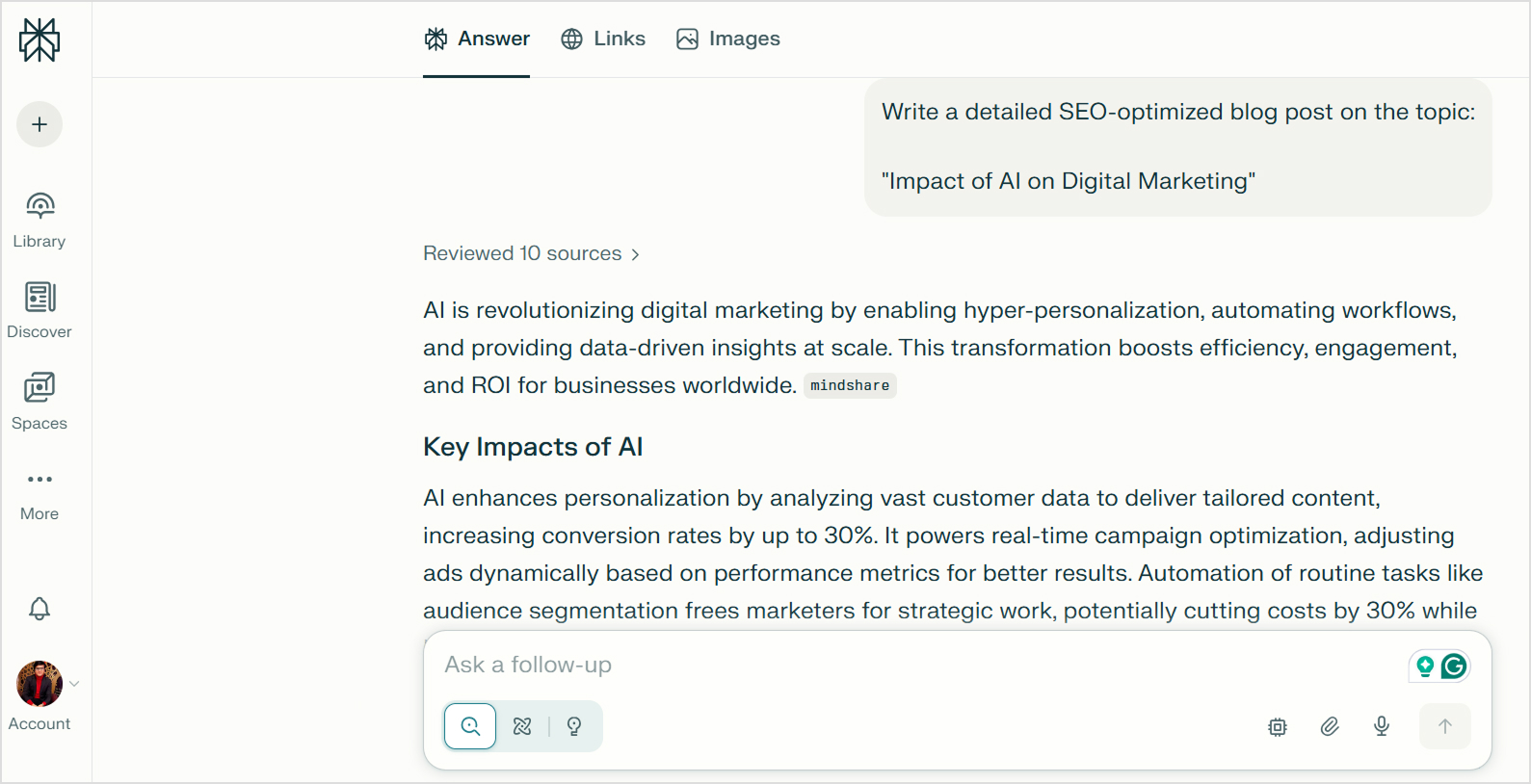
Perplexity produced a concise, structured response of about 264 words, organized into clear sections. The content leaned heavily on bullet points and specific statistics (like “conversion rates by up to 30%” and “147% improved segmentation”).
The tool list was particularly detailed, naming specific platforms like ChatGPT, Albert.ai, Optimove, Tidio, Jasper AI, and Copy.ai with brief explanations of each. The writing was functional and information-dense, but read more like a summary or research brief.
Analysis of Gemini’s output
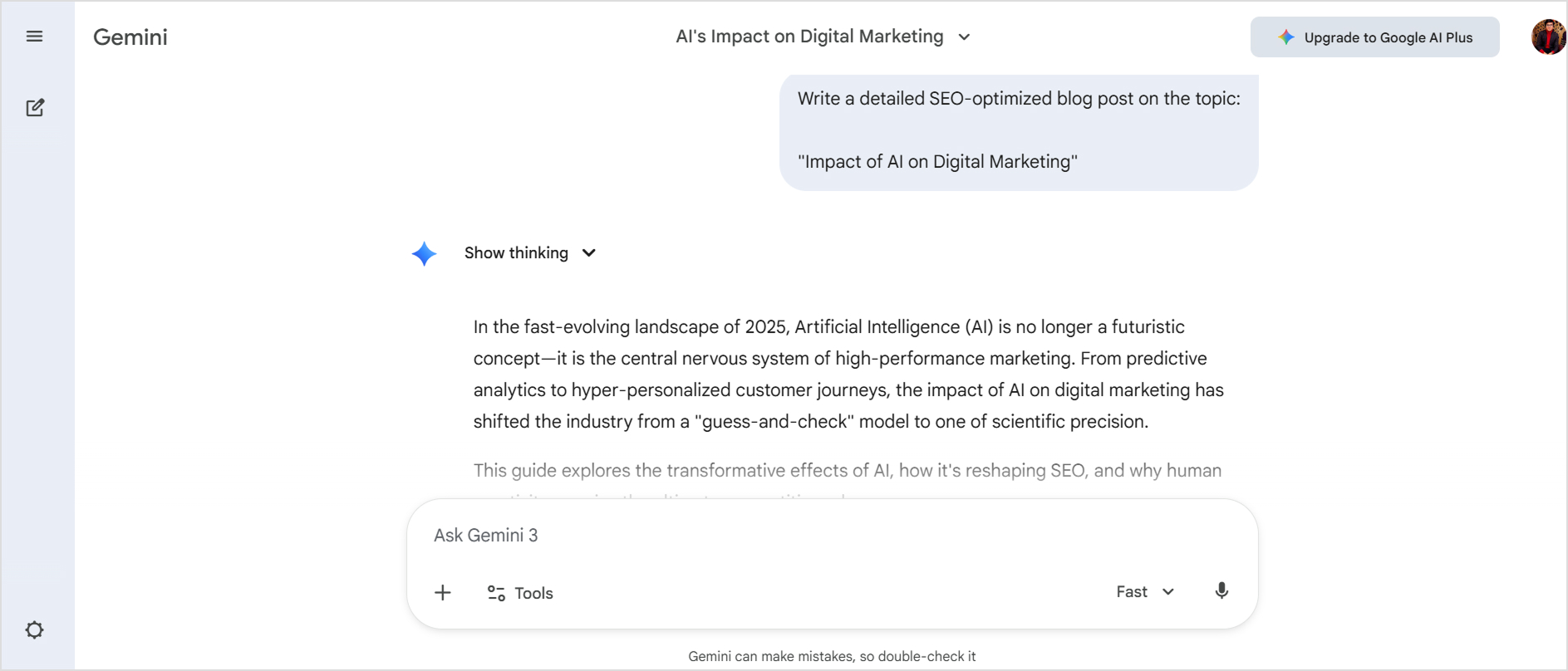
Gemini delivered a substantially longer piece of about 609 words with a more editorial structure. It opened with context about AI becoming “the central nervous system of high-performance marketing” and organized content into narrative sections covering personalization, SEO changes, content creation tradeoffs, predictive analytics, and ethical considerations.
The writing included more nuanced takes, like distinguishing between “AI Shovelware” and quality content, and concluded with a “Future is Hybrid” thesis about human-AI collaboration.
What this comparison reveals
The difference is stark. Perplexity answered the prompt like a research question, providing factual information in a condensed format. Gemini treated it as an actual blog-writing task, producing content with narrative flow, clear section transitions, and a point of view.
Overall, Gemini’s output is closer to a usable first draft for bloggers. You would need to edit for voice and add your own insights, but the structure and flow are there.
That said, neither output was publish-ready. Both lacked the depth, originality, and specific expertise that quality blog content requires.
Gemini’s strengths
Based on our real-world test and general blogging usage, here’s where Gemini consistently delivers:
- Substantial content output. Gemini produced 609 words compared to Perplexity’s 264, more than double the length of the same prompt. Bloggers usually need comprehensive content, which Gemini can generate, especially for the first draft.
- Editorial structure and flow. The AI marketing blog included proper sections with transitions, a clear thesis, and narrative progression from problem to solution.
- Nuanced perspectives. Gemini introduced concepts like “AI Shovelware” to describe low-quality automated content and included a comparison table weighing traditional versus AI-augmented approaches.
- Adaptable style. The output demonstrated range, from data-driven sections on predictive analytics to more philosophical conclusions about human creativity.
- Practical frameworks. The “2025 Rule” Gemini proposed (use AI for the skeleton, humans for the soul) gives readers an actionable takeaway. This kind of synthesized advice is exactly what blog readers want.
- Google ecosystem integration. For writers already in Google Docs, Gmail, and Drive, having AI assistance built into those tools streamlines workflow. You don’t need to copy and paste between applications.
Gemini’s weaknesses
Our test and regular usage reveal these limitations:
- Source verification challenges. Gemini’s AI marketing blog included statistics and claims without citations. Statements like “conversion rates by up to 30%” appeared without sources.
- Generic phrasing creeps in. Despite the strong structure, Gemini’s output included phrases like “central nervous system of high-performance marketing” and “scientific precision” that lack substance.
- Confident presentation of potentially outdated information. Gemini wrote authoritatively about “2025” trends and specific AI capabilities that would need fact-checking. The confident tone can mask uncertainty about accuracy.
- Limited specialized optimization. Gemini doesn’t offer SEO scoring, keyword optimization tools, or content performance predictions. You’re getting a writing assistant, not a comprehensive content platform.
- Still requires significant human editing. While Gemini produced more blog-ready content than Perplexity, it was still not publishable without substantial revision for voice, accuracy, and originality.
Perplexity’s strengths
Our test and regular usage highlight these advantages of using Perplexity for blog writing:
- Information density. Despite being less than half Gemini’s length, Perplexity’s output packed in specific tool names, concrete statistics, and actionable information.
- Specific, verifiable claims. Perplexity included statistics like “cutting costs by 30% while lifting sales by 50%” and “147% improved segmentation.” While these still need verification, the tool’s specificity gives you concrete data points to work with.
- Practical tool recommendations. Rather than speaking abstractly about AI in marketing, Perplexity named actual platforms and explained what each does. This gives readers immediate next steps, which is valuable for how-to content.
- Built-in citation habits. Even in this test where full citations weren’t displayed, Perplexity’s research-first approach means it draws from real sources.
- Structured information delivery. The clear sections made information easy to scan and extract. If you’re using AI output as research rather than a draft, this organization helps.
Perplexity’s weaknesses
Our test revealed these significant Perplexity limitations for blogging:
- Insufficient length for blog content. At 264 words, Perplexity’s output wouldn’t meet minimum standards for most blog posts. It answered the prompt, but didn’t write a detailed blog.
- Heavy reliance on bullet points. The output was predominantly lists and bullets with minimal connecting prose. This format works for reference material, but doesn’t create the reading experience blog audiences expect.
- No narrative or editorial voice. Perplexity’s response lacked a thesis, point of view, or narrative arc. It presented information without synthesizing it into an argument or story that would engage readers.
- Missing transitions and flow. Each section felt disconnected from the others. There was no introduction framing the topic’s importance, and no conclusion tying insights together. The content would need substantial writing to function as a complete blog post.
User reviews for Perplexity and Gemini
Real user feedback often reveals what marketing pages won’t tell you. Here’s what actual users say about both tools on Capterra.
Gemini user reviews
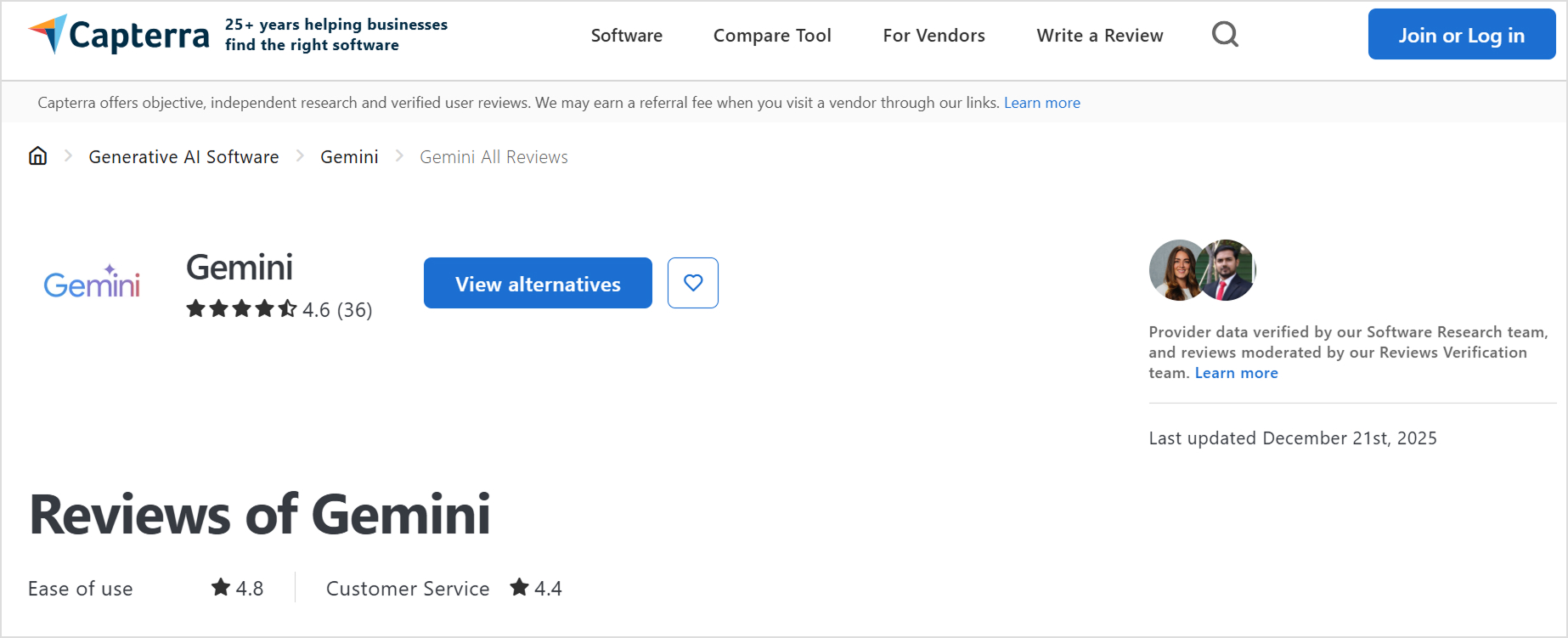
Users consistently praise Gemini’s versatility across professional and creative tasks. One reviewer working in legal drafting noted that Gemini “saves significant time on legal research and document preparation, while also being creative enough for image tasks.”
Image generation receives particular enthusiasm. One user called Gemini’s image capabilities a “killer” feature that made them consider switching to a Gemini-powered smartphone. For bloggers who need occasional visuals alongside their writing, this multimodal strength matters.
The criticisms center on consistency. Users report “occasional output inconsistencies when handling complex or multi-step requests” and note that “some advanced features require manual fine-tuning.” For blog writing, this can lead to frustration when working on longer, more nuanced pieces that require sustained coherence.
Perplexity user reviews
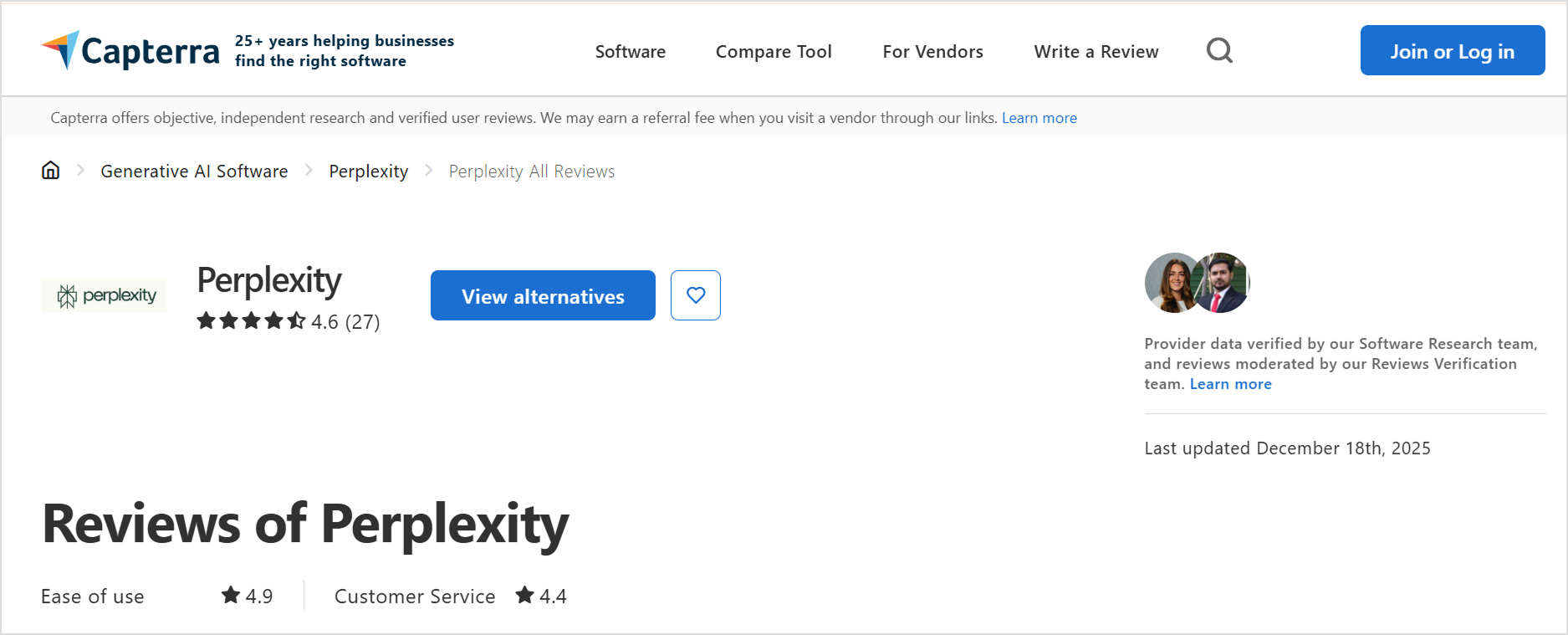
Perplexity users emphasize productivity gains, with one reviewer claiming it “lets me do 5 hours of work in 15 minutes” for document review and drafting. The Spaces feature, which lets users create topic-specific AI workspaces, received praise for helping users build expertise in specific fields over time.
The ability to access multiple AI models from one interface stands out as a differentiator. One user appreciated that Perplexity automatically detects “which model is best for a specific question,” removing the guesswork of choosing between different AI engines.
However, users flag concerns about source depth and accuracy. One user noted that “Perplexity uses fewer sources than others for a Search” and that they encountered hallucinations.
Contentpen: A better alternative to Perplexity and Gemini for blogging
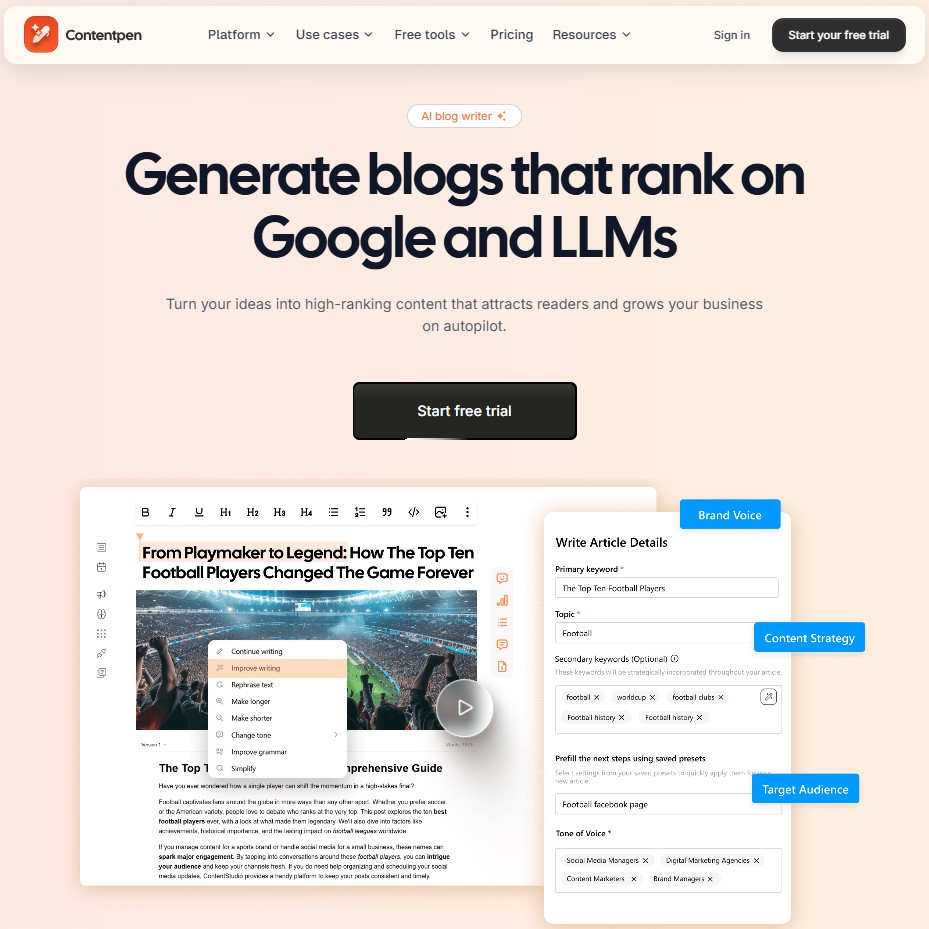
Perplexity vs Gemini reveal significant differences and valuable capabilities of these AI tools for blogging. However, neither is designed specifically for blog content creation and content marketing.
Perplexity excels at research, Gemini at conversational writing, but bloggers often need something that combines research, writing, optimization, and publishing in one interface.
Contentpen was built specifically for this purpose. Rather than adapting a general-purpose AI to blogging, Contentpen approaches the problem from the blogger’s perspective.
- Integrated research and writing. Contentpen handles keyword research natively, helping you identify topics with search potential before you start writing.
- Built-in SEO options. Where Perplexity and Gemini require separate SEO tools, Contentpen includes SEO scoring and SERP analysis that evaluates content as you create it. You see optimization opportunities in real time rather than after the post goes live.
- Full blog creation capability. Contentpen generates complete, publish-ready blog posts. You’re not getting answers to questions or general writing assistance, but rather actual articles formatted and structured for web publication.
- Direct publishing integration. Once content is ready, Contentpen connects directly to WordPress and other CMS platforms for integrated publishing. This eliminates the copy-paste workflow that general AI tools require.
- Bulk content creation. For content teams or bloggers managing multiple sites, Contentpen scales efficiently. With our AI blog writer, you can create multiple optimized posts without any hurdles.
Overall, bloggers specifically looking for tools to improve their content workflow will find Contentpen as their ideal blogging partner.
Final verdict: Which AI is better for blog writing?
After examining both tools across research, reasoning, writing, depth, and SEO understanding, here’s the straightforward assessment:
Choose Perplexity if:
- Research accuracy is your top priority
- You write fact-heavy content that requires verification
- You want citations built into your workflow
- You’ll handle the actual writing yourself or with another tool
Choose Gemini if:
- You need help with the actual writing process
- Your brand needs stylistic flexibility
- You work primarily in Google’s ecosystem
- You produce long-form content requiring sustained coherence
Consider Contentpen if:
- You need an end-to-end blog creation capability
- SEO optimization is central to your strategy
- You want publishing integration built in
- You’re producing content at scale
We hope this analysis helps you choose the right tool for your needs to streamline workflows and boost productivity.
Frequently asked questions
Neither is universally better. Perplexity is better for research and fact-checking, while Gemini is better for drafting and long-form writing.
Perplexity is best for research, sourcing, and data gathering. It’s not ideal for writing full blog posts without heavy editing.
Perplexity remains one of the strongest options available for pure research with citations. However, for blog writing specifically, purpose-built tools like Contentpen offer advantages that general AI assistants don’t.
For blog writing, purpose-built tools like Contentpen often outperform Gemini because they offer built-in SEO and publishing features.
Perplexity is more trustworthy than many AI research tools, specifically because it shows its sources. You can verify each claim by clicking the cited reference. That said, you should always fact-check AI-generated content, no matter which tool you use.
Subscribe to our newsletter

Join our subscriber list to get the latest blogs, product updates, and industry news!
By subscribing you agree to our terms of service and privacy policy.
You might be interested in...
Perplexity vs Gemini: An honest comparison for content writers
Looking for the best AI assistant for blog writing? Struggling to simplify your workflow and meet publishing deadlines? Worry not, we’ve got you covered with the solution! With so many options promising to transform your content workflow, two tools always stand out: Perplexity AI and Google’s Gemini. These platforms have varying working processes for using […]
Jan 23, 2026
Copilot vs Gemini for content creators: The ultimate 2026 showdown
The AI assistant marketplace is becoming competitive, with Microsoft Copilot and Google Gemini emerging as two prominent contenders for content creators. Both platforms promise to help you use AI to write blog posts efficiently, enhance productivity, and deliver quality content, but they take different approaches to achieve these goals. If you’re a blogger, content marketer, […]
Jan 16, 2026
Claude vs Gemini: The ultimate showdown for content creators in 2026
If you’re a content creator, blogger, or digital marketer trying to decide between Claude and Gemini, you’re not alone. Both AI assistants have carved out impressive niches in the content creation space, but which one actually delivers better results? In this comprehensive comparison, we’ll put Claude and Gemini head-to-head across multiple aspects that matter most […]
Jan 14, 2026