Summarize this page via
Perplexity vs ChatGPT: Which AI actually helps you write better blogs?
 Dec 3, 2025
 21 minutes
Should you use an AI that writes beautifully but might get facts wrong, or one that nails the research but writes like a Wikipedia entry?
That’s essentially the Perplexity vs ChatGPT debate in a nutshell.
ChatGPT is definitely the most popular tool in the AI space. It writes engaging content, adapts to your voice, and can turn a boring topic into something people actually want to read. The catch? It sometimes sounds confident about things that aren’t quite accurate.
Perplexity took a different route entirely. Instead of trying to be the best writer, it became the best researcher. Every answer comes with receipts in the form of cited sources. It searches the web in real-time and tells you exactly where it found each piece of information.
So which one should you use for blog writing?
The honest answer is more nuanced than you might expect. This guide breaks down the Perplexity vs ChatGPT comparison from every angle that matters to bloggers and content marketers.
We’ll look at real writing samples, compare their actual capabilities, user reviews, and show you exactly where each tool shines or falls short.
General overview of ChatGPT’s capabilities
ChatGPT, developed by OpenAI, has become synonymous with AI writing assistance. It is built on the GPT (Generative Pre-trained Transformer) architecture and excels at producing human-like text across virtually any topic you can imagine.
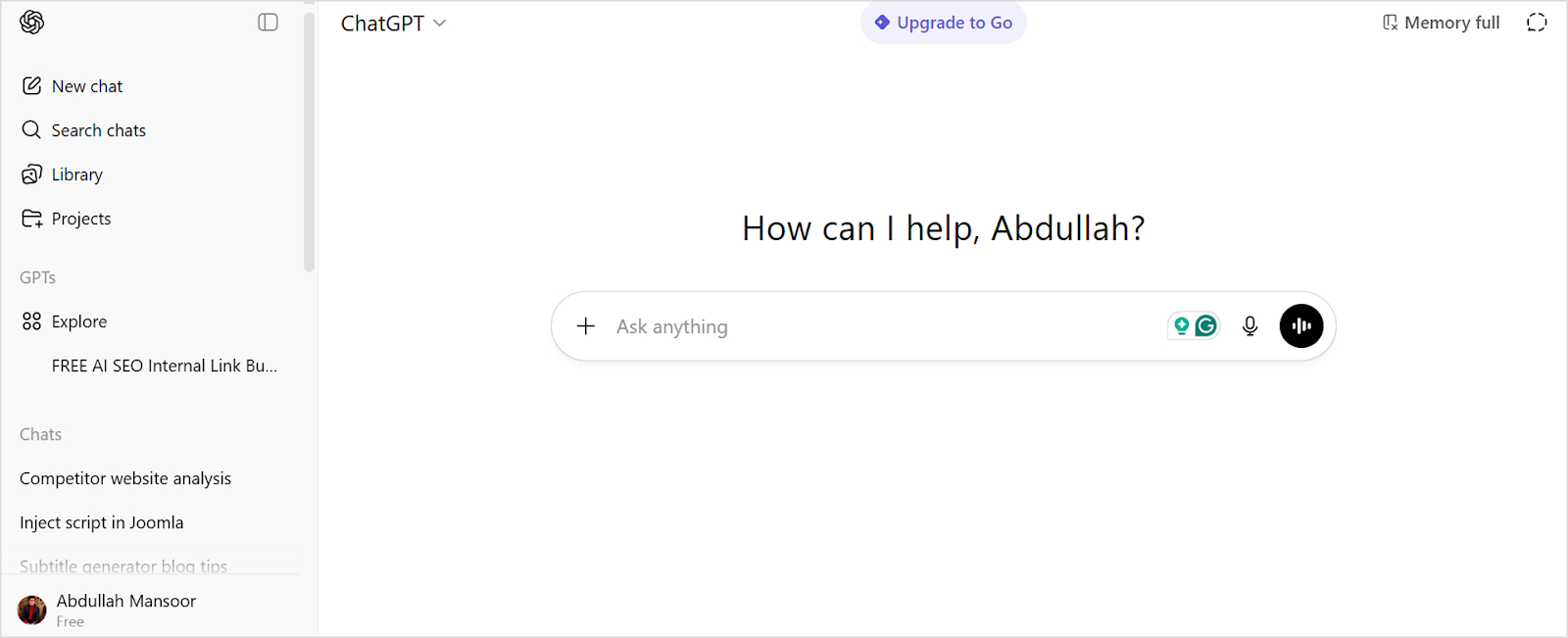
ChatGPT offers several compelling advantages to bloggers and content creators:
- ChatGPT can adapt its style to match your brand voice, whether you need casual blog posts.
- The tool understands how to incorporate keywords into content without making it sound forced.
- From outlining entire blog posts to expanding bullet points into full paragraphs, ChatGPT manages the structural elements of writing efficiently.
- You can prompt ChatGPT to adjust tone, fix grammar issues, or completely rewrite sections.
Overall, ChatGPT works best as a versatile writing partner that can produce polished, publication-ready content quickly.
General overview of Perplexity’s capabilities
Perplexity takes a different approach to AI assistance. Instead of focusing purely on content creation, it functions as an AI-powered answer engine that searches the web in real-time and provides cited responses.
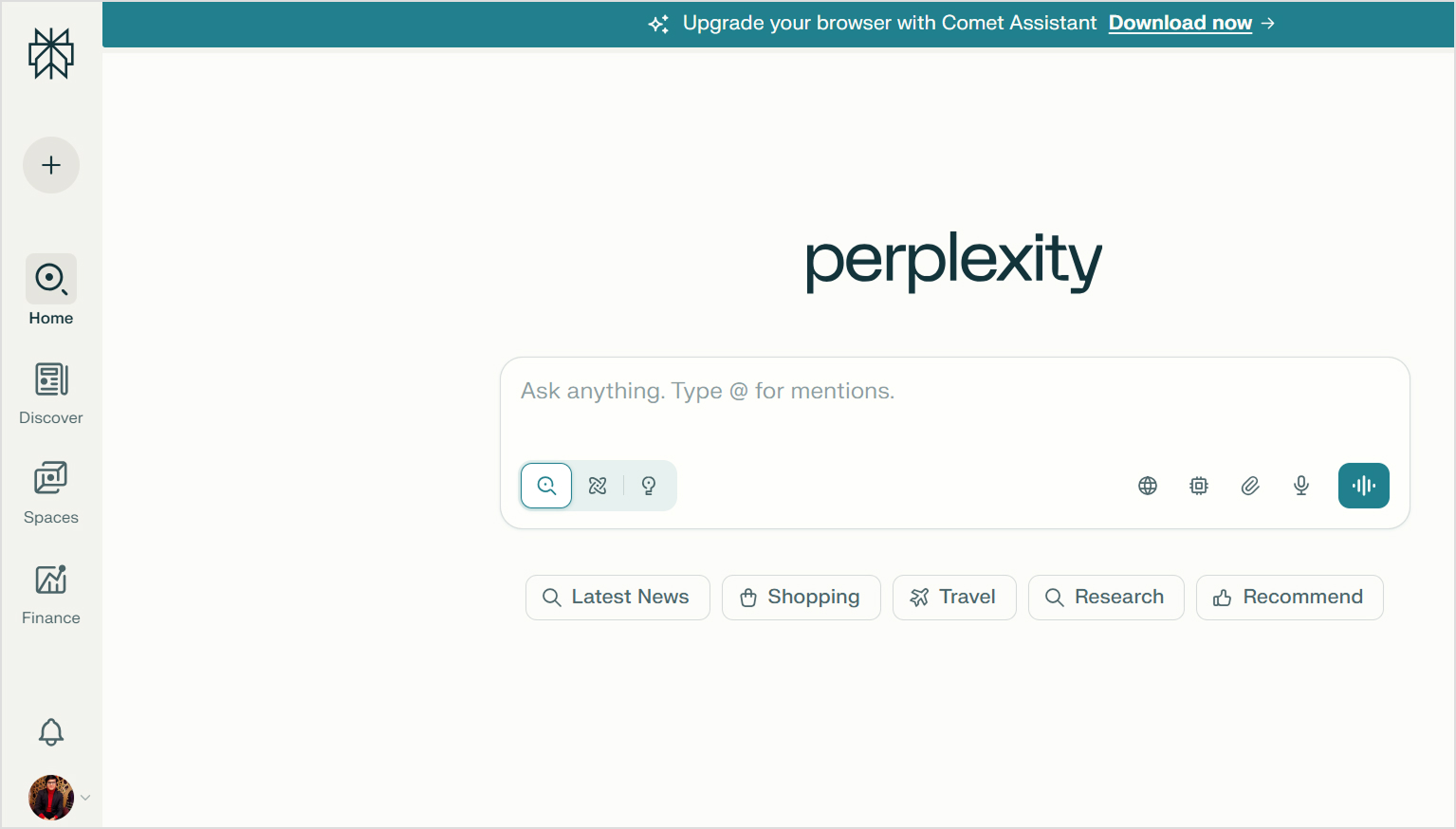
This fundamental difference shapes how Perplexity serves content creators through these key features:
- Unlike ChatGPT’s static knowledge base, Perplexity searches current information from across the internet.
- Every response from Perplexity includes links to the sources it used. This transparency makes fact-checking easier and adds credibility to your research process.
- Perplexity excels at gathering information from multiple sources and synthesizing it into coherent summaries.
- The platform allows conversational follow-ups that refine your research. You can dig deeper into specific aspects without starting new searches from scratch.
- Perplexity offers specialized search modes (Academic, Writing, Video, etc.) that tailor results to specific content types and quality standards.
Overall, Perplexity functions as an intelligent research assistant. It is great in situations when you need accurate, current information with verifiable sources rather than creative content generation.
Comparing Perplexity vs ChatGPT
The comparison of Perplexity vs ChatGPT shows several key differences between them.
ChatGPT is built for generation, while Perplexity is built for research. However, both can contribute to the blog writing process in different ways.
The following table provides a quick side-by-side comparison of ChatGPT vs Perplexity:
| Feature | Perplexity | ChatGPT |
| Content quality | Informational and fact-focused. Less engaging prose | Fluent and versatile. Can feel formulaic at times |
| Research capability | Excellent real-time web search with source citations | Web browsing available (Plus), but less research-focused |
| Reasoning | Strong analytical synthesis from multiple sources | Excellent reasoning and logic structuring |
| Content depth | Great for research depth, weaker for narrative depth | Good depth for creative content, can lose focus in very long pieces |
| Tone consistency | Neutral and informational tone | Highly adaptable to different tones and styles |
| SEO understanding | Limited SEO optimization features | Excellent SEO awareness and keyword integration |
| Image generation | Yes. Perplexity Pro users can generate images | DALL-E integration available (Plus/Pro) |
| Source citations | Automatic citation with every response | No built-in citation. Manual fact-checking required |
| Speed | Fast for research, slower for writing | Generally faster for content generation |
| Fact accuracy | Very high accuracy with real-time web data | Can provide outdated or incorrect facts without web browsing |
| Pricing (Paid plan) | Pro: $20/month, Max: $200/month | Plus: $20/month, Pro: $200/month |
| Best for | Research, fact-gathering, and current information | Creative writing, blog drafting, brand content, social media |
Let’s examine each comparison point in detail.
Perplexity vs ChatGPT in research
Perplexity dominates in research capabilities. Its real-time web search pulls current information from across the internet and presents it with source citations. This makes verifying facts straightforward and ensures your content is based on the latest data.
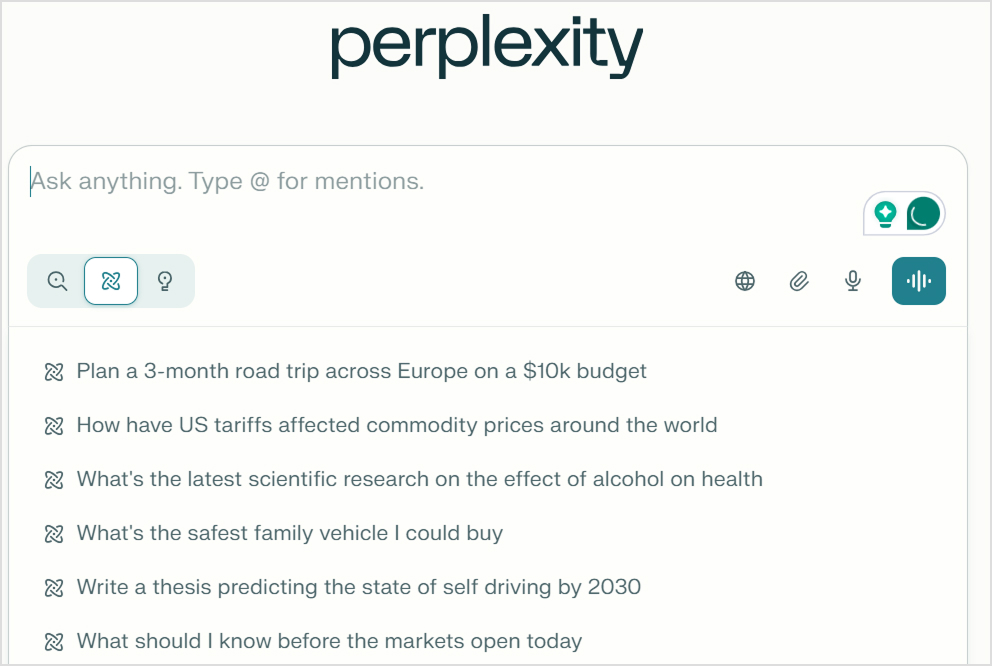
ChatGPT approaches research differently. It relies primarily on its training data, which has a knowledge cutoff (October 2024 for GPT-5). While ChatGPT also includes web browsing capabilities, it’s not as well integrated as Perplexity’s core search functionality.
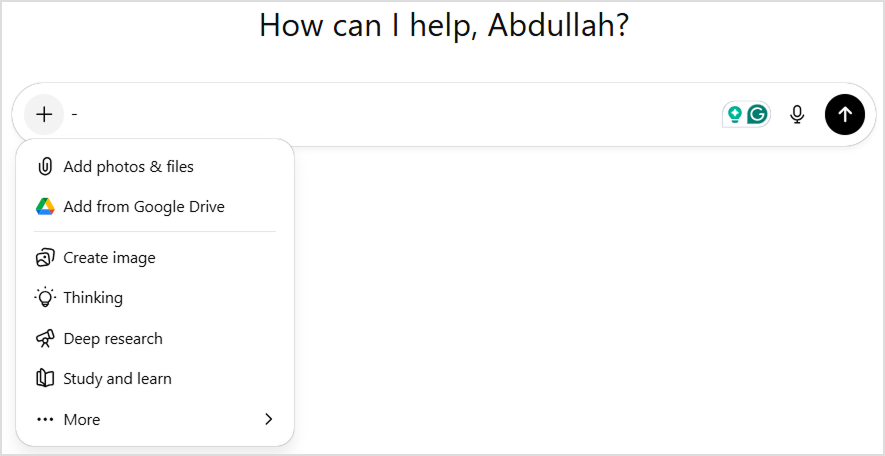
Blog writers often need to reference recent statistics, current events, or emerging trends. Perplexity provides a clear advantage here. The cited sources also help build credibility when you’re writing authoritative content.
Winner: In terms of Perplexity vs ChatGPT for research, Perplexity is the clear winner. It is best for research-heavy content that requires current information and verifiable sources. ChatGPT works better when you’re writing about established topics (evergreen content) that don’t change frequently.
Perplexity vs ChatGPT in reasoning
Both tools demonstrate strong reasoning capabilities, but they apply them differently.
ChatGPT excels at structuring logical arguments and creating coherent narratives. It can build persuasive frameworks, organize information hierarchically, and connect ideas in ways that support specific conclusions. This makes it valuable for opinion pieces, thought leadership, and argumentative content.
Perplexity’s reasoning shines in synthesis. It analyzes information from multiple sources and identifies patterns, contradictions, and consensus views. This analytical approach helps you understand complex topics from multiple perspectives before writing about them.
Winner: Use ChatGPT when you need to construct arguments or create logical content structures. Choose Perplexity when you need to analyze diverse viewpoints and turn comprehensive research into actionable insights.
Perplexity vs ChatGPT in content writing
A lot of you are likely to be reading this article to understand the role of Perplexity vs ChatGPT for writing. The comparison becomes the most distinct in this area.
ChatGPT is purpose-built for content generation. It creates engaging introductions, develops ideas with appropriate detail, maintains consistent tone throughout long pieces, and produces content that feels conversational and human. The tool adapts to brand voices, handles creative challenges, and delivers polished drafts that need relatively minor editing.
Perplexity generates content more as a byproduct of its research function. The writing tends to be informational and straightforward, prioritizing accuracy over engagement. While it can produce text, the output often lacks the narrative flow and stylistic polish that make blog content compelling.
Winner: ChatGPT is the clear winner for actual content writing. Perplexity is better used as a research tool that sets the foundation of your writing instead of generating the content directly.
Note: We’ll compare the blog writing results of both Perplexity and ChatGPT in detail later with a real example.
Perplexity vs ChatGPT in content depth
Content depth has two dimensions: factual depth and narrative depth.
Perplexity is best for factual depth. It pulls information from multiple authoritative sources and presents comprehensive overviews of complex topics. The cited sources allow you to dive even deeper into specific aspects that interest you.
ChatGPT takes the lead for narrative depth. It develops ideas thoroughly, provides relevant examples, and explores implications in ways that create engaging reading experiences. The content feels developed rather than merely informative.
Winner: Perplexity offers better factual and research depth. ChatGPT delivers better narrative and creative depth.
Perplexity vs ChatGPT in image generation
Perplexity can generate images using multiple integrated engines (such as FLUX, DALL·E, Seedream, and Gemini). However, the results vary significantly depending on the model selected, and users often report inconsistent quality and a less polished UI experience.

ChatGPT, on the other hand, offers more stable, high-quality image generation through its multimodal GPT-4o system. It produces more coherent, detailed visuals and provides a smoother prompting, refinement, and regeneration workflow.
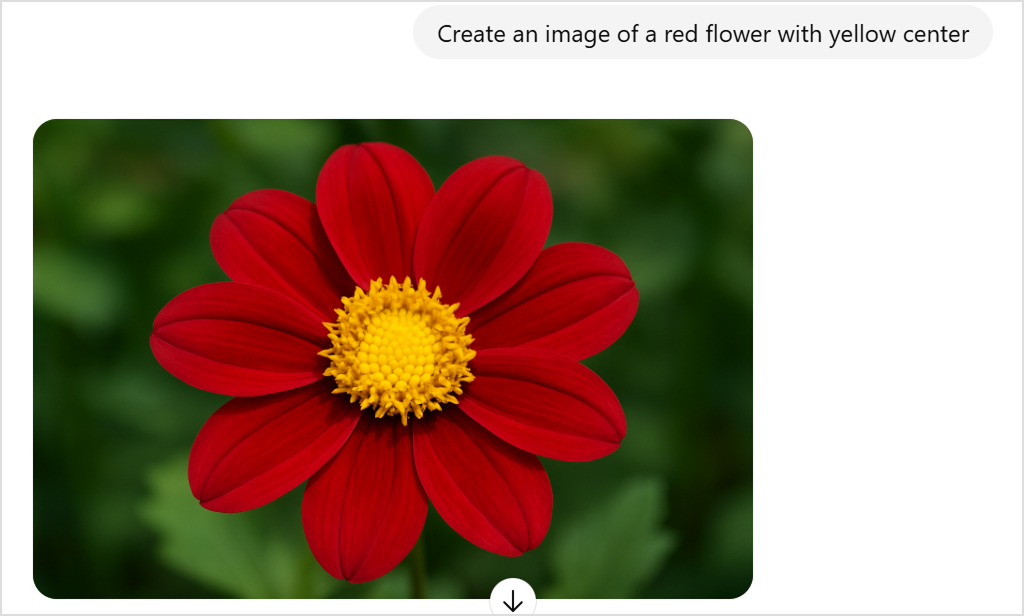
Winner: ChatGPT is the better choice for creating high-quality, consistent visual assets directly alongside written content.
Perplexity vs ChatGPT in SEO understanding
ChatGPT has a stronger grasp of SEO principles and practical implementation. It understands keyword placement, meta descriptions, header structure, internal linking concepts, and how to balance optimization with readability. The tool can write content that targets specific search intent while maintaining natural language flow.
Perplexity approaches SEO more indirectly. While it can research SEO best practices and provide information about optimization strategies, it’s not designed to implement these strategies in the content it generates. The platform is more useful for researching keywords and understanding search landscapes than for creating SEO-optimized articles.
Winner: ChatGPT is significantly better for creating SEO-optimized blog content. Perplexity is useful for SEO research but not for implementation.
Creating a real blog with ChatGPT and Perplexity
To provide a practical comparison of Perplexity vs ChatGPT, we’ll create the same blog post using both platforms. This hands-on test reveals how each tool performs in a real content creation scenario.
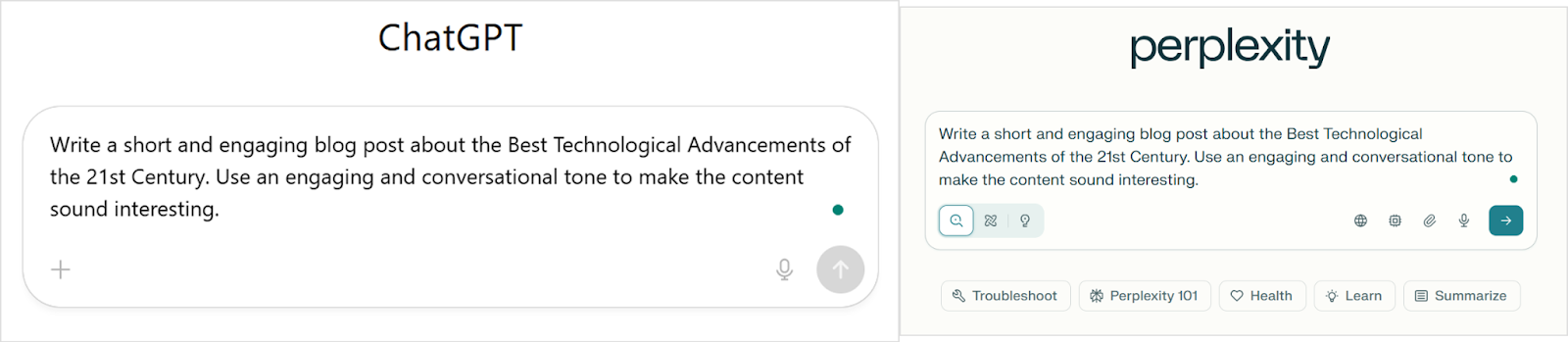
We’ll use an identical prompt for both tools to ensure a fair comparison:
“Write a short and engaging blog post about the Best Technological Advancements of the 21st Century. Use an engaging and conversational tone to make the content sound interesting.”
Analysis of ChatGPT’s writing output
ChatGPT delivered an energetic, well-organized piece that immediately grabbed attention. The title was straightforward and clear, setting expectations perfectly for what followed.
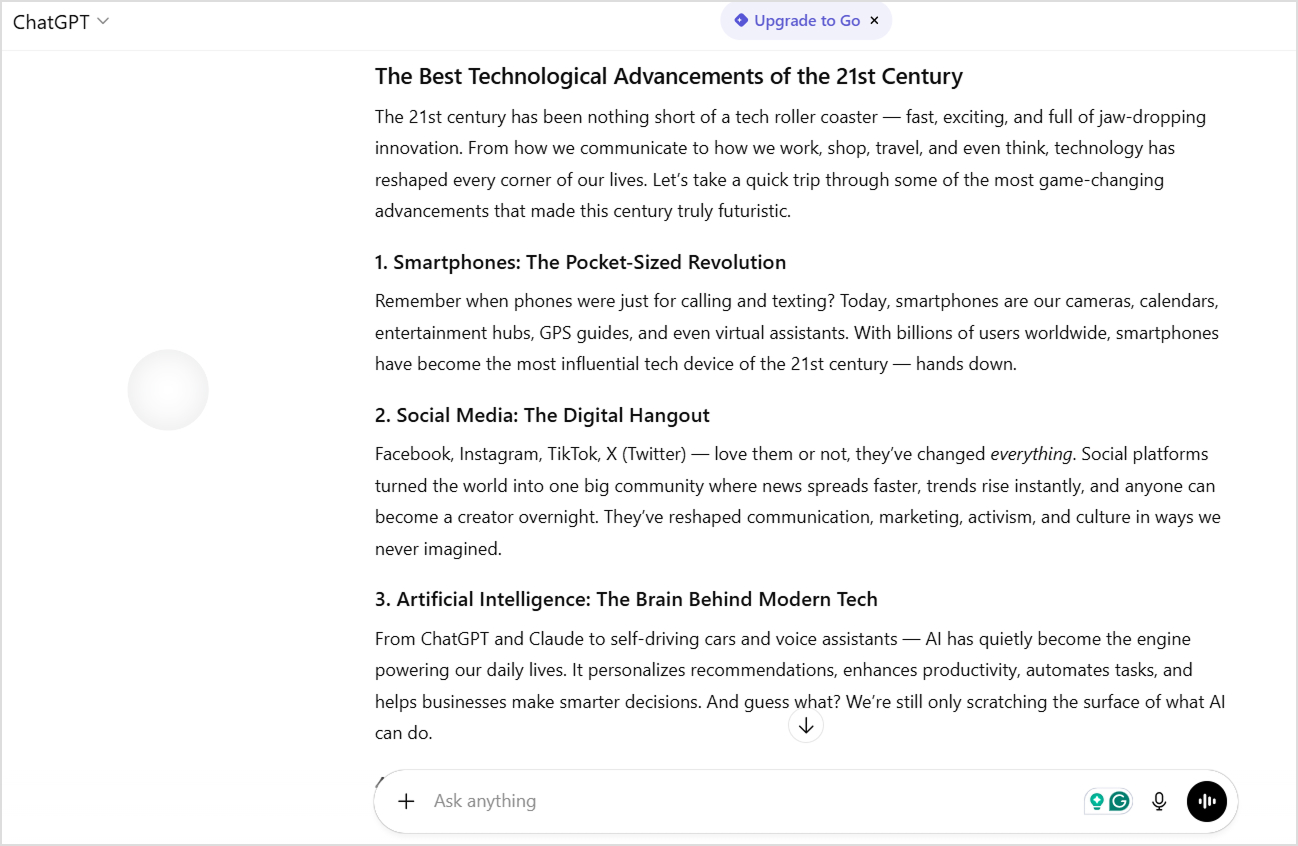
The introduction opened with vivid imagery: “The 21st century has been nothing short of a tech roller coaster — fast, exciting, and full of jaw-dropping innovation.” This metaphor establishes tone and energy from the first sentence.
The body used a numbered list format covering ten distinct technological advancements. Each section included a catchy subheading with a descriptive tagline (“Smartphones: The Pocket-Sized Revolution”).
The writing maintained consistent energy with phrases like “hands down,” “love them or not,” and “guess what?” that created conversational momentum.
ChatGPT included rhetorical questions and direct reader engagement throughout. The conclusion tied everything together with forward-looking enthusiasm: “Buckle up — the tech ride is far from over.”
ChatGPT’s strengths for writing
ChatGPT’s output shows why it’s become the go-to tool for content creators who need publish-ready blog posts.
- Highly scannable structure. The numbered list format with bold subheadings made it effortless to skim and find specific topics of interest.
- Consistent conversational energy. Every section maintained the same engaging, enthusiastic tone without dropping into formal or academic language.
- Comprehensive coverage. Ten different technologies provided breadth that made the piece feel authoritative and complete.
- Reader engagement techniques. Rhetorical questions, direct address (“Remember when…”), and casual phrases kept readers involved throughout.
- Strong opening and closing. Both the introduction and conclusion used memorable imagery and calls to action that bookended the content effectively.
- Natural keyword integration. Terms like “technological advancements” and “21st century” appeared organically without feeling forced.
ChatGPT’s weaknesses for writing
Despite its polished appearance, several telltale signs revealed the content’s AI origins.
- Predictable structure. The numbered list format, while effective, feels like a template used across millions of AI-generated articles.
- Generic enthusiasm. Phrases like “game-changing,” “nothing short of,” and “jaw-dropping” are AI writing markers that signal machine-generated content.
- Surface-level explanations. Each technology got a brief treatment without deep insights or unexpected perspectives that would demonstrate genuine expertise.
- No sources or data. The content made broad claims about impact without statistics, studies, or citations to back them up.
- Repetitive transitions. Similar sentence structures and transition patterns appeared throughout, creating a rhythmic predictability.
- Missing a unique voice. The content could belong to any tech blog, lacking a distinctive personality or perspective that builds brand identity.
Analysis of Perplexity’s writing output
Perplexity took a noticeably more condensed approach to the same prompt. The content focused on five key technologies rather than attempting comprehensive coverage.
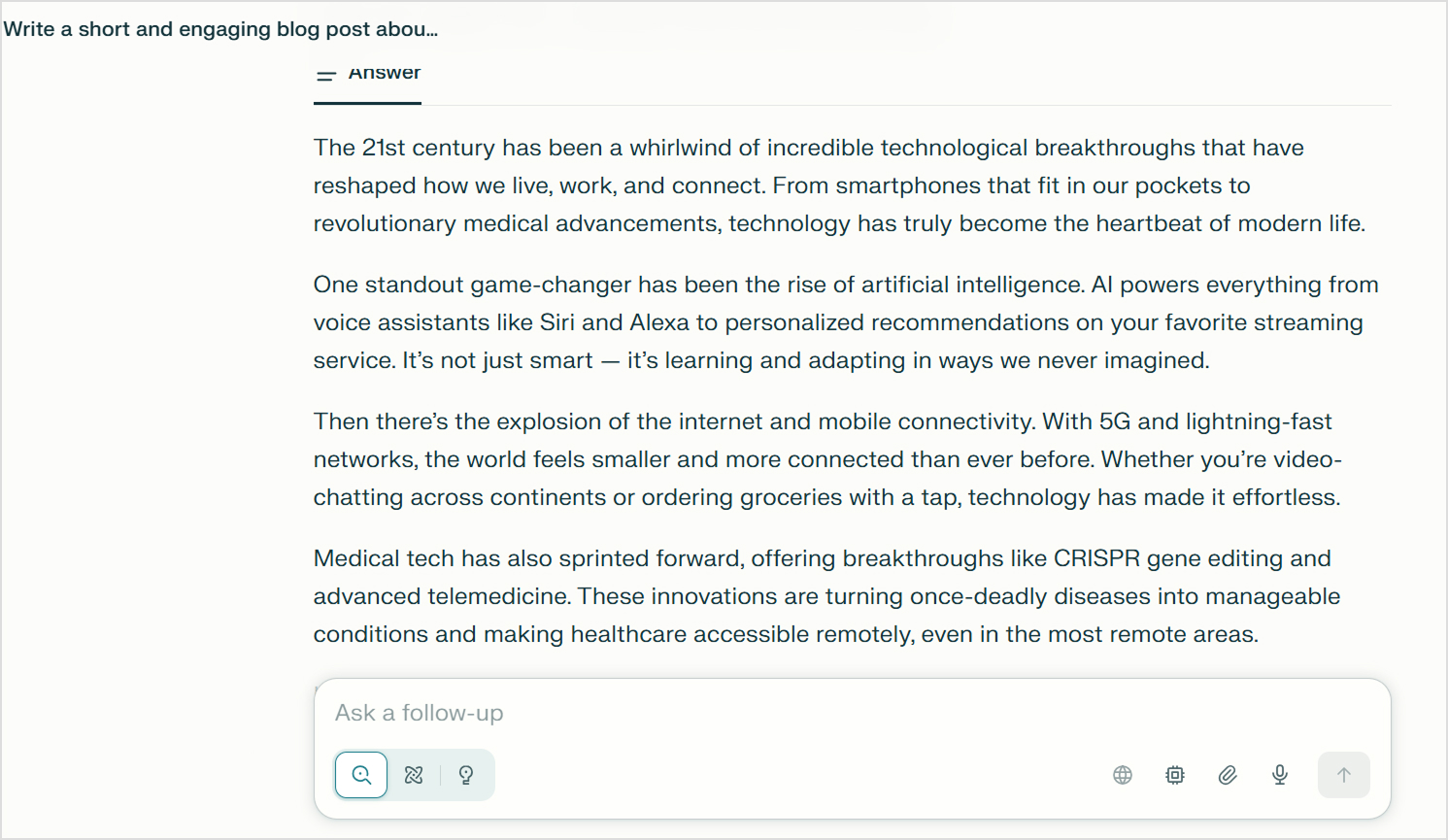
The introduction used similar engaging language: “The 21st century has been a whirlwind of incredible technological breakthroughs.” However, it moved quickly into substance rather than extending the setup.
The body organized information by technology, but without numbered formatting. Each paragraph flowed into the next, creating a more essay-like reading experience. The writing included specific examples like “Siri and Alexa” and mentioned concrete technologies like “CRISPR gene editing” and “5G.”
The conclusion posed a direct question to readers: “What tech advancement has wowed you the most this century?” This engagement technique invited reflection and potential discussion.
Perplexity’s strengths for writing
Perplexity brought a more refined approach to the content, even if it fell short on comprehensiveness.
- More focused coverage. By covering five technologies instead of ten, each got slightly more thoughtful treatment and context.
- Specific examples and terminology. Mentioning CRISPR, 5G, and telemedicine added technical credibility that generic descriptions lack.
- Cleaner prose. The writing avoided some of the more obvious AI clichés that ChatGPT included, creating slightly more natural-sounding content.
- Thematic organization. Technologies were grouped logically (connectivity, AI, medical, energy) rather than just listed.
- Reader question ending. The concluding question created an opening for engagement that felt less formulaic than ChatGPT’s metaphorical closing.
- Varied sentence structure. The content mixed short and long sentences more effectively, improving natural reading rhythm.
Perplexity’s weaknesses in writing
Where Perplexity typically shines in research, this output revealed unexpected limitations in content generation.
- Less comprehensive coverage. Only five technologies meant significant omissions like blockchain, wearables, and 3D printing that readers might expect.
- Shorter overall length. The content felt somewhat abbreviated compared to what the prompt requested, potentially leaving readers wanting more substance.
- Limited engagement techniques. Fewer conversational hooks and less personality throughout made it feel more informational than entertaining.
- No citations despite research focus. Surprisingly, Perplexity didn’t include its characteristic source citations even when making factual claims about technologies.
- Weaker structural hierarchy. Without numbered lists or bold subheadings, the content was less scannable and harder to navigate quickly.
- Generic opening. The “whirlwind” metaphor in the introduction felt just as template-driven as ChatGPT’s “roller coaster,” showing both tools rely on similar imagery.
Summary of Perplexity vs ChatGPT for blog writing
This practical test reinforces the fundamental difference between Perplexity vs ChatGPT for content creation.
- ChatGPT excelled at creating engaging, structured blog content that readers can easily scan and enjoy. The numbered format, consistent tone, and comprehensive coverage made it feel like a complete, polished blog post ready for publication with minor edits.
- Perplexity produced more concise, slightly more sophisticated prose with better specificity in examples. The content felt less template-driven in places, though still generic overall.
Users’ reviews for Perplexity & ChatGPT
Real user experiences provide important details when evaluating Perplexity vs ChatGPT. These reviews come from verified users on G2 who use these tools daily in their content workflows, research tasks, and creative projects.
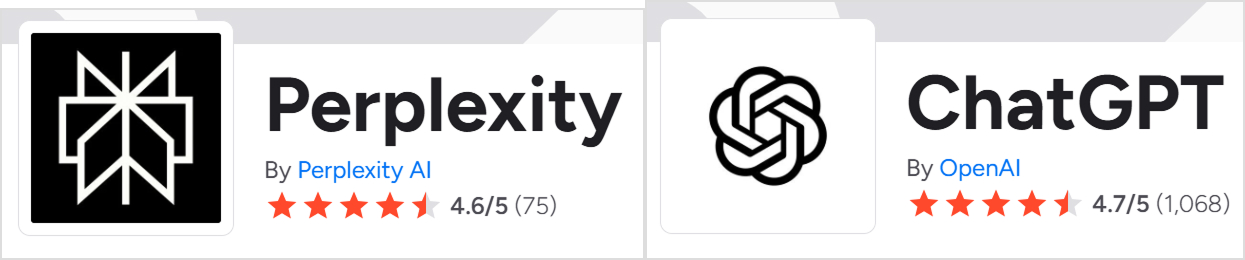
Overall ratings from G2
ChatGPT: 4.7/5 based on 1,068 reviews and Perplexity: 4.6/5 based on 75 reviews
Both platforms maintain strong ratings, with ChatGPT having significantly more extensive review coverage due to its longer market presence and larger user base. The close ratings suggest both tools deliver substantial value, though they serve different primary purposes.
What users say about Perplexity
Praised for:
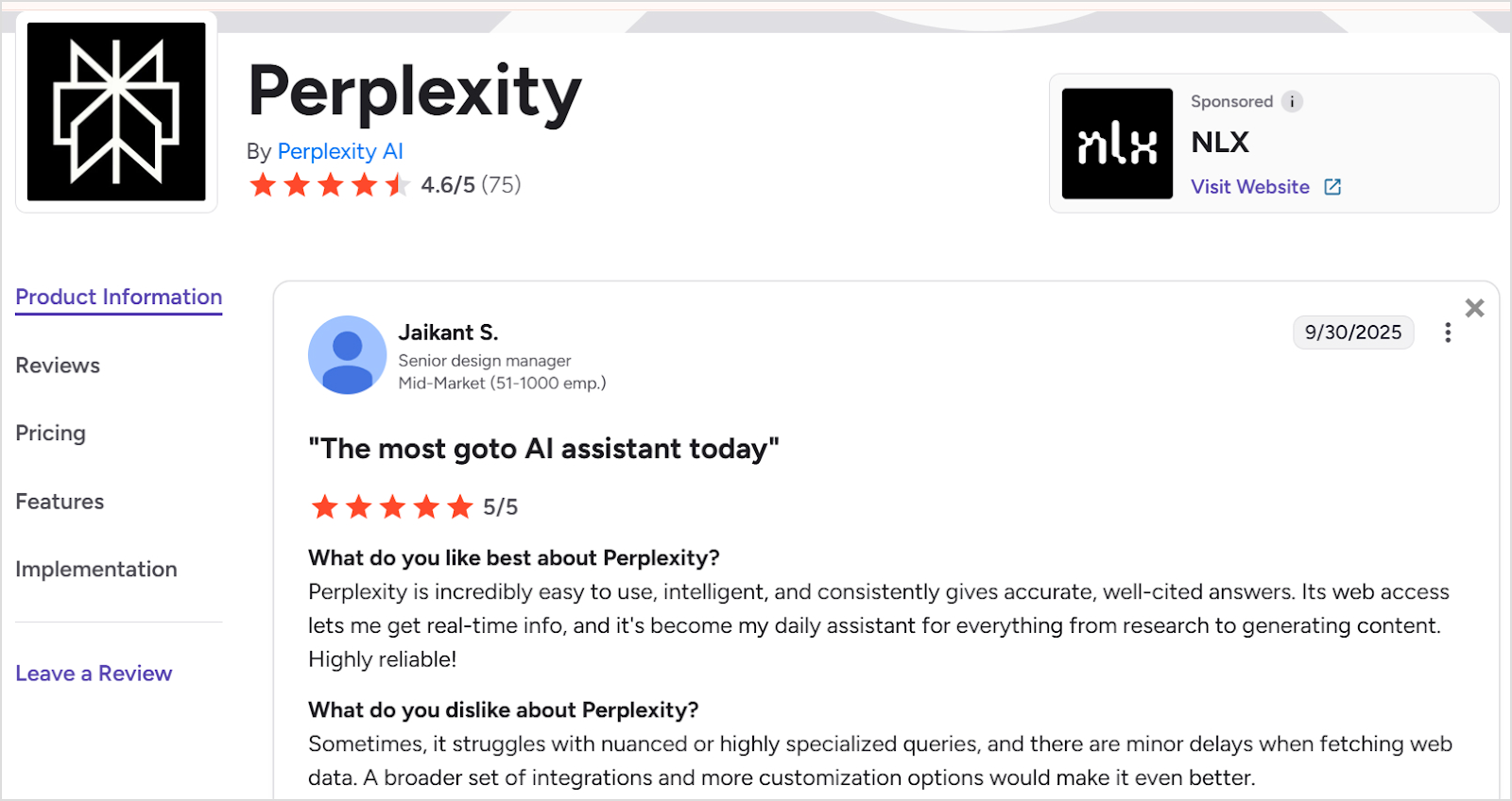
- Accuracy with source citations. Users consistently highlight Perplexity’s reliable, verified answers that come with proper citations. One marketing consultant noted it provides “reliable and verified answers, providing me with enhanced efficiency and time-saving capabilities for diverse tasks like video editing, content writing, and academic processes.”
- Real-time web access. The ability to fetch current information is a major selling point. A user emphasized that “its web access lets me get real-time info, and it’s become my daily assistant for everything from research to generating content.”
- Contextual conversation flow. Perplexity maintains context effectively throughout conversations, preventing repetitive mistakes and allowing for deeper exploration of topics without starting over.
- Easy setup and usability. Multiple reviewers mentioned the smooth onboarding experience with “just a few clicks to get started” and appreciated features like “spaces” that organize research projects.
- Complex query handling. Users value Perplexity’s “ability to handle complex multi-step tasks swiftly compared to human efforts,” making it particularly useful for in-depth research.
Common complaints:
- Inconsistent performance. Some users report that “randomly it will stop understanding basic tasks” and that “language output prompts definitely don’t work right,” requiring frequent verification.
- Limited language support. The lack of support for certain languages like Sanskrit limits its usefulness for some user segments working with specialized linguistic content.
- Struggles with specialized queries. Users note it “sometimes struggles with nuanced or highly specialized queries” and experiences “minor delays when fetching web data.”
- Needs more integrations. Several reviewers requested “a broader set of integrations and more customization options” to enhance workflow efficiency.
- Verification still required. Despite its citation features, users emphasize that “sometimes you really have to verify everything,” suggesting the citations don’t completely eliminate fact-checking needs.
What users say about ChatGPT
Praised for:
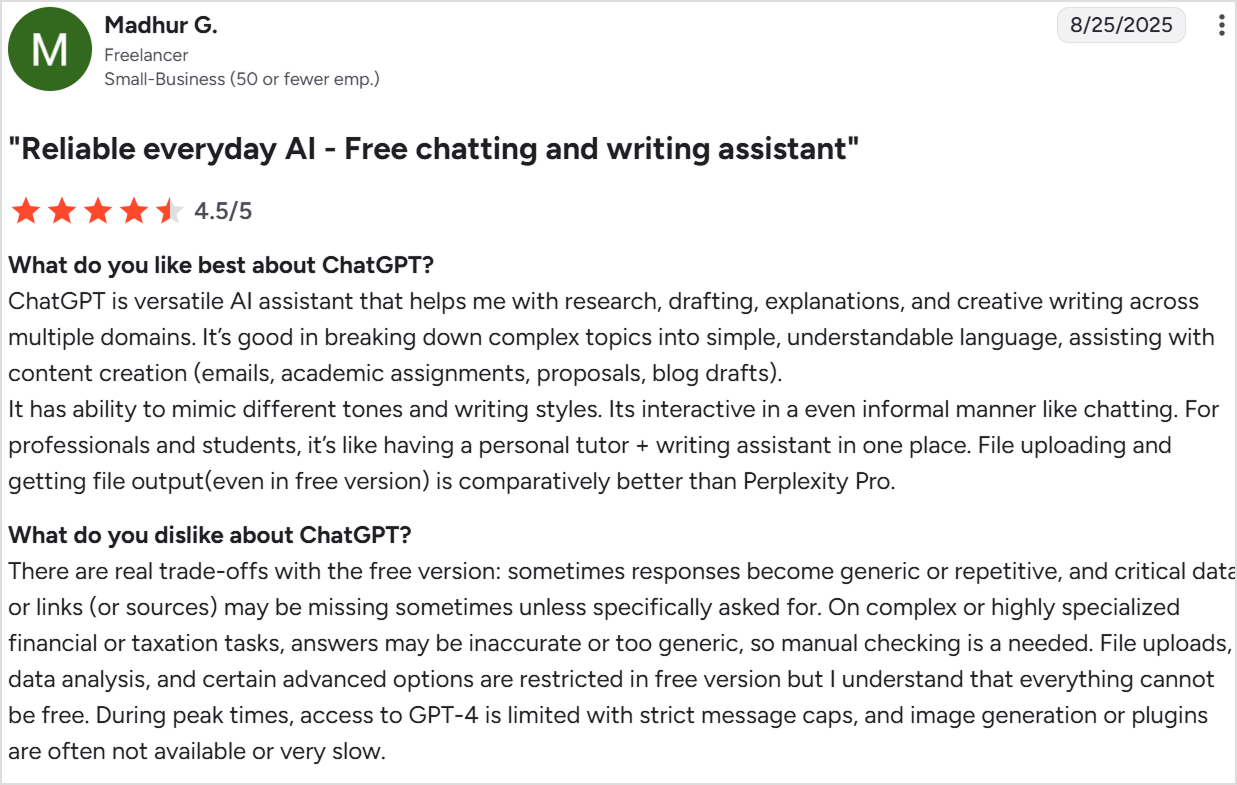
- Exceptional versatility. Users love ChatGPT’s ability to handle diverse tasks from research to creative writing. One reviewer called it “a versatile AI assistant that helps me with research, drafting, explanations, and creative writing across multiple domains.”
- Excellent at simplification. ChatGPT excels at “breaking down complex topics into simple, understandable language,” making it valuable for both professionals and students.
- Tone and style adaptation. The “ability to mimic different tones and writing styles” allows users to match brand voices and adjust content for different audiences effortlessly.
- Conversational interaction. Users appreciate that it’s “interactive in an even informal manner like chatting,” making the experience feel natural rather than robotic.
- Time-saving efficiency. Many reviewers mention how ChatGPT “regularly saves me time” by helping with editing, reviewing lines, and speeding up the writing process.
- Coding assistance. Several users specifically praised its JavaScript and general coding capabilities for development work.
- File handling capabilities. The ability to upload files and receive file outputs, “even in the free version,” compares favorably to competitors.
Common complaints:
- Hallucinations and inaccuracies. The most frequent criticism is that ChatGPT “can hallucinate” and provide confidently incorrect information. One user described asking about flights from their local airport and receiving completely wrong information that was only corrected when challenged.
- Generic and repetitive responses. Free version users note that “sometimes responses become generic or repetitive” and lack the depth available in paid tiers.
- Missing sources and citations. Users complain that “critical data or links (or sources) may be missing sometimes unless specifically asked for,” requiring manual verification.
- Inaccurate on specialized topics. For “complex or highly specialized financial or taxation tasks, answers may be inaccurate or too generic, so manual checking is needed.”
- Free version limitations. Many features like advanced data analysis, certain file types, and consistent GPT-4 access are restricted, with “strict message caps” during peak times.
- Slow image generation. Users report that “image generation or plugins are often not available or very slow,” impacting workflow efficiency.
Overall, the reviews reveal a clear usage pattern when comparing Perplexity vs ChatGPT. Users turn to Perplexity when they need accurate, cited information for research-heavy tasks and real-time data. ChatGPT dominates as a “personal tutor + writing assistant in one place” for users who prioritize content creation, creative writing, and conversational interaction.
Contentpen – A better alternative to Perplexity & ChatGPT
While both Perplexity and ChatGPT offer valuable features for content creators, neither was specifically designed to handle the complete blog creation process from start to finish.Perplexity excels at research but falls short in content generation. ChatGPT produces engaging writing but requires manual fact-checking and research. Both leave significant gaps in a comprehensive content workflow that includes keyword research, SEO optimization, publishing, and performance tracking.
This AI blog writer bridges these gaps by functioning as an all-in-one content platform rather than just an AI writing assistant. It’s specifically built for bloggers, marketers, and businesses who need to create, optimize, and scale blog content systematically.
The following table explains why Contentpen is better than both Perplexity and ChatGPT for blog creation:
| Feature | Perplexity | ChatGPT | Contentpen |
| AI writing quality | ⚪ Research-focused, less engaging | ✅ Creative and versatile | ✅ SEO-focused, brand-aligned, one-click generation |
| Keyword research | ❌ Manual process | ❌ Manual process | ✅ Automatic and intelligent |
| Research capability | ✅ Excellent with citations | ⚪ Good with web browsing | ✅ Built-in research integration |
| SEO & GEO optimization | ❌ Minimal | ⚪ Strong when prompted | ✅ Advanced, automated optimization |
| Publishing | ❌ Manual export and upload | ❌ Manual export and upload | ✅ One-click WordPress publishing |
| Images & media | ❌ No visual generation | ✅ Limited DALL-E access | ✅ AI-generated visuals included |
| Content calendar | ❌ None | ❌ None | ✅ Auto-created and scheduled |
| SEO insights | ❌ None | ⚪ Limited via plugins | ✅ Built-in performance tracking |
| Source citations | ✅ Automatic | ⚪ Limited with web search | ✅ Optional citation integration |
| Scalability | ⚪ Moderate research volume | ⚪ High writing volume | ✅ Unlimited bulk content automation |
| Fact-checking | ✅ Built-in through citations | ❌ Fully manual | ✅ Automated verification options |
With Contentpen, you don’t have to choose between research accuracy and writing quality. It combines the research capabilities that make Perplexity valuable with the content generation strengths that make ChatGPT useful, then adds comprehensive SEO and publishing features that neither platform offers.
The platform handles keyword research automatically, generates optimized content that aligns with your brand voice, creates accompanying visuals, and publishes directly to WordPress. This eliminates the fragmented workflow of using multiple tools and manual processes that slow down content production.
Similarly, teams and businesses scaling content can enjoy Contentpen’s bulk generation capabilities and built-in content calendar transform content marketing from a tactical challenge into a strategic advantage.
Final Verdict – Which is better for blog writing?
The Perplexity vs ChatGPT comparison ultimately comes down to understanding what each tool was built to do.
Perplexity is an AI-powered research engine that excels at gathering current information, synthesizing multiple sources, and providing cited facts. On the other hand, ChatGPT is a generative AI assistant optimized for content creation, creative writing, and conversational engagement.
Neither tool alone provides the complete solution modern content creators actually need. So, if you’re looking to scale content production systematically rather than piecing together workflows from multiple tools, Contentpen offers a more comprehensive solution. It integrates research, writing, SEO optimization, and publishing into a single platform designed specifically for blog content creation.
Start your free trial of Contentpen today and experience how streamlined content creation can transform your blogging process.
Frequently asked questions
Use Perplexity when you need to research current information, gather facts from multiple sources, or verify claims with citations. It’s ideal for fact-checking, staying updated on recent developments, and building research foundations for content.
Choose ChatGPT when you need to write blog posts, create engaging content, generate creative material, or adapt content to specific brand voices. ChatGPT excels at the actual writing process, while Perplexity excels at the research process.
Not necessarily, as they serve different primary purposes. Perplexity is better for research tasks that require current information, source citations, and fact verification. ChatGPT is better for creative writing, content generation, and producing engaging blog posts.
The “better” tool depends entirely on whether you need research capabilities or content creation capabilities. For comprehensive blog writing workflows, many creators use both tools together.
Perplexity is not the most powerful AI overall, but it’s one of the most powerful AI research tools available. Its strength lies specifically in real-time web search, source synthesis, and information retrieval with citations. Other AI models like ChatGPT, Claude, or specialized AI systems may be more powerful for tasks like creative writing, coding, image generation, or complex reasoning.
The 30% rule in AI suggests that AI should handle approximately 70% of repetitive, routine, and time-consuming tasks, while humans focus on the remaining 30% that requires creativity, strategic thinking, ethical judgment, and critical decision-making.
Perplexity doesn’t have a traditional knowledge cutoff because it performs real-time web searches for each query. It accesses current information from the internet up to the present moment, which means it can provide information about events happening today.
ChatGPT’s knowledge cutoff depends on the specific version. GPT-5’s training data extends through October 2024, which means its core knowledge stops at that point. However, users can also enable the web search option to search for and incorporate more current information when needed.
Subscribe to our newsletter

Join our subscriber list to get the latest blogs, product updates, and industry news!
By subscribing you agree to our terms of service and privacy policy.
You might be interested in...
Perplexity vs Gemini: An honest comparison for content writers
Looking for the best AI assistant for blog writing? Struggling to simplify your workflow and meet publishing deadlines? Worry not, we’ve got you covered with the solution! With so many options promising to transform your content workflow, two tools always stand out: Perplexity AI and Google’s Gemini. These platforms have varying working processes for using […]
Jan 23, 2026
Copilot vs Gemini for content creators: The ultimate 2026 showdown
The AI assistant marketplace is becoming competitive, with Microsoft Copilot and Google Gemini emerging as two prominent contenders for content creators. Both platforms promise to help you use AI to write blog posts efficiently, enhance productivity, and deliver quality content, but they take different approaches to achieve these goals. If you’re a blogger, content marketer, […]
Jan 16, 2026
Claude vs Gemini: The ultimate showdown for content creators in 2026
If you’re a content creator, blogger, or digital marketer trying to decide between Claude and Gemini, you’re not alone. Both AI assistants have carved out impressive niches in the content creation space, but which one actually delivers better results? In this comprehensive comparison, we’ll put Claude and Gemini head-to-head across multiple aspects that matter most […]
Jan 14, 2026